

Everyone in development is taught, sooner or later, that an anecdote might not scale. One woman cannot explain a problem affecting 8.5 lakh others.I have spent the last three years learning that the opposite can also be true.
The story may not scale. The diagnosis can.
I am new to the development sector, and the most useful thing I have carried into it did not solely come from this job. It came from a college trip: an overnight bus to Himachal with four friends, travelling to meet one woman. Her name is Dimple ji.
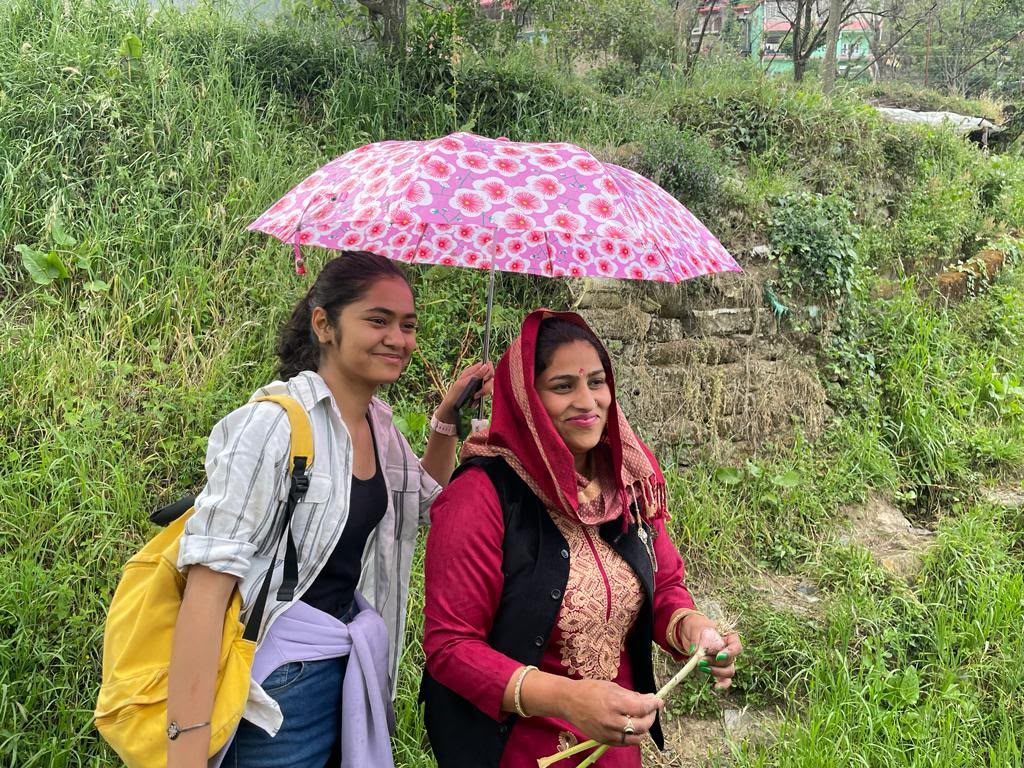
When the problem in front of me later became much larger—how rural women across Jammu and Kashmir could access credit and build enterprises,I did not begin with a framework. I began with what Dimple ji had taught me in Solan. We had decided what her problem was before we met her.
She made baskets from pine needles. The hills produced the raw material in abundance. The craft was good, we thought. The market was missing.
We were WRONG!
Dimple ji did not tell us she needed someone to find her a market. What she wanted was more fundamental. She wanted money that was hers, money she would not have to ask her husband for, and could put into her household on her own terms. She wanted to be looked at differently in her village. And she wanted someone to tell her that the work she was doing was good. What sounded like three different requests was, in fact, one. She wanted her work to count.
We had diagnosed the market before meeting the entrepreneur. We spent most of a day in Solan asking people questions before someone finally told us that the Block Development Office existed—and pointed us towards it.
There were schemes. There had been schemes for years.
Five students had travelled from Delhi trying to build something the state had already built. The problem was not always that support did not exist. Sometimes, nobody knew where the door was. For a long time, I was embarrassed by that. Then I realised it was probably the most useful mistake we could have made.
Absent and unfound are not the same problem. If an institution is absent, you have to build one. But if an institution exists but cannot be found, you have to build the bridge to it. That distinction has stayed with me.
So have the four things Dimple ji had asked for, even if she never used those words: financial independence, identity, recognition and access.
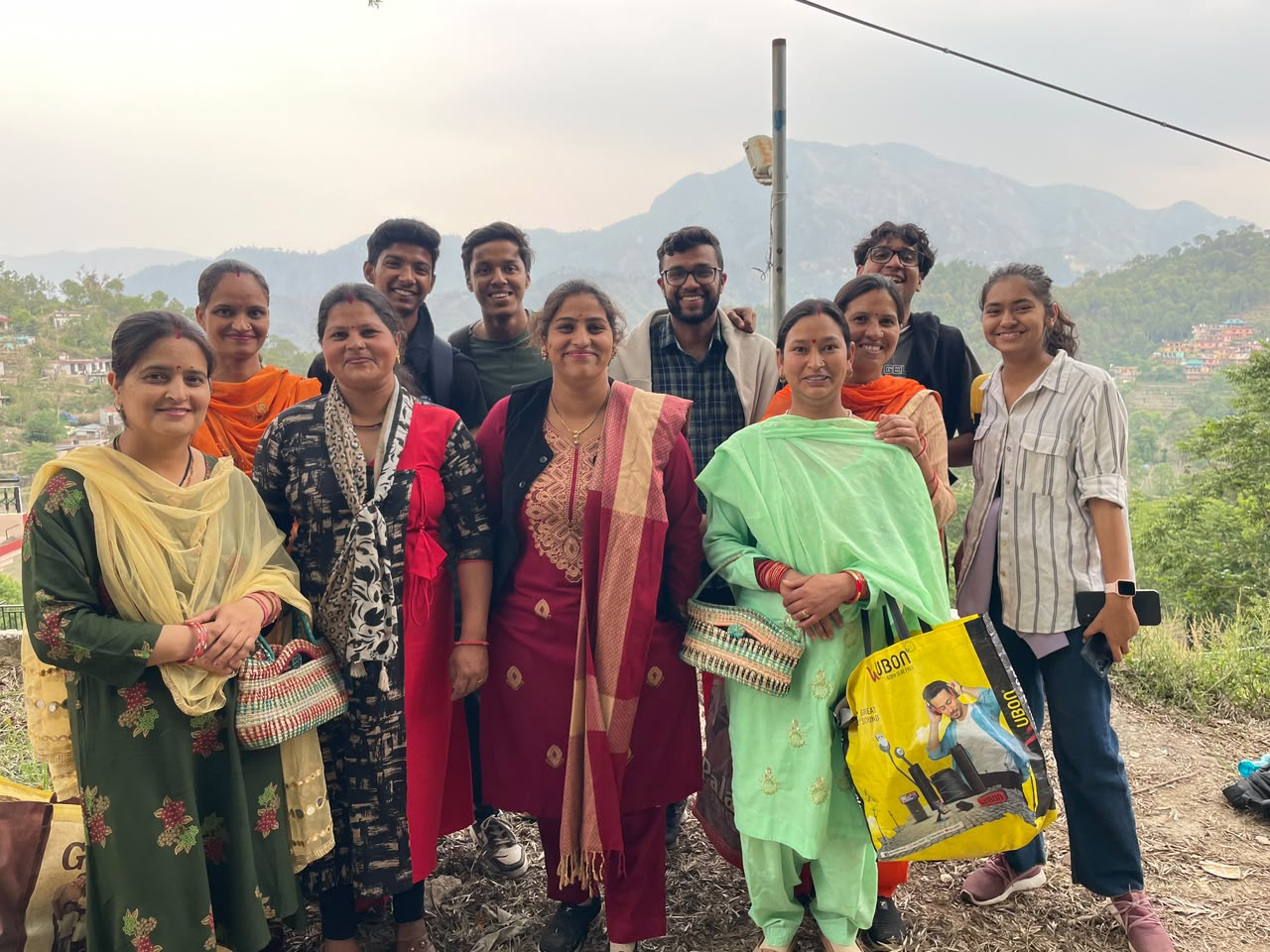
I now work on Mission YUVA, the Government of Jammu and Kashmir's enterprise mission. The question is no longer how one woman gets support. It is how rural women, across twenty districts, can reach credit, enterprise opportunities and the institutions designed to support them.
At that scale, the instruments have to change. The diagnosis does not.
On a field visit in Shopian or Pulwama, you do not have to look very hard to find economic activity: a stitching unit in a back room, a spice grinder, four looms in a courtyard, two animals.
The challenge is not always to create an entrepreneur. Often, it is to recognise one—and decide whether the system is willing to finance her.
You cannot sit with 8.5 lakh women individually. But you can listen systematically to what they are already doing. That meant building a sector and subsector typology from the activities women were actually applying with, rather than beginning with a list drafted in advance. Looking at it block by block showed where an activity had become saturated and, more importantly, where participation had barely begun. Scale does not mean listening less. It means finding better ways to listen to more people.
Self-help groups are important institutions connecting rural women to formal finance. They create savings, build repayment discipline and make collective borrowing possible. But a group is a route. It is not an address.
In Mission YUVA, women account for 33 per cent of applications, up from 27 per cent in May. Female-led applications increased by 76 per cent in average daily intake. The collective is important. But it cannot become the only way we see women. These figures describe participation, not financial independence achieved. The real question is whether credit reaches women in ways that allow them to start or expand enterprises and exercise greater control over their earnings.
In our outreach, we began with interactions with just 100 women and one application form. Today, we have interacted with 2 lakh women, and 16,000 rural women applications have come in.
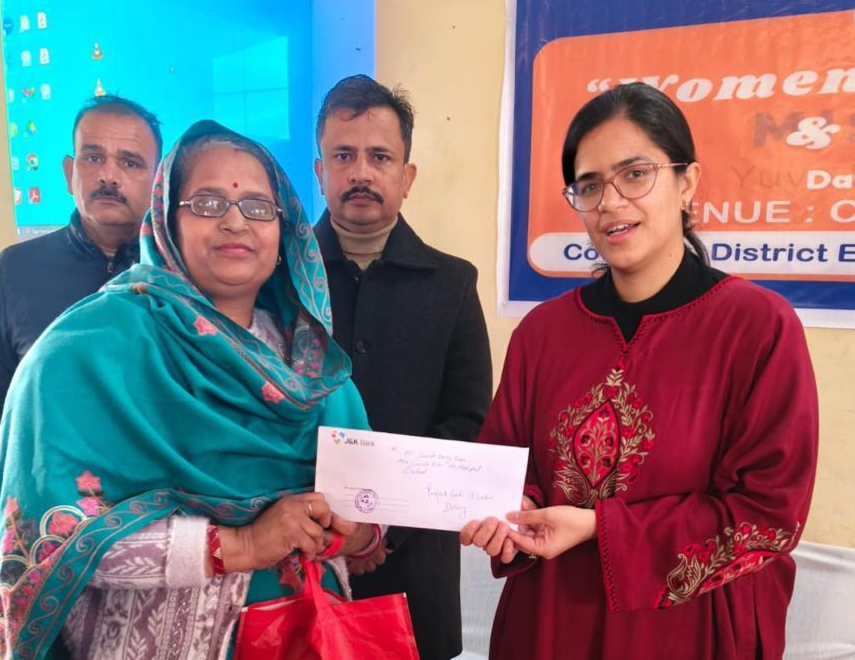
This is perhaps the least glamorous part of the work—and the part I would argue for first. The grassroots staff at panchayat level go from house to house across all twenty districts. Allocations are broken down to blocks and panchayats.
The purpose is simple: A woman should not have to find the scheme. The scheme should find her. Sometimes, that is a data problem.
A fair amount of my own work has involved reconciling panchayat names across datasets that spell the same place differently. Transliteration changes. Names vary slightly and a match fails. On a spreadsheet, that looks like housekeeping. On the ground, it can mean nobody is assigned to visit that woman. And then she does not appear as a failure. She does not appear at all.
That is the difference between the presence of a state and the delivery of a state
By mid-October 2026, 33,990 women had applied to Mission YUVA, accounting for approximately 33% of all applications. That is more than a measure of participation. It raises a more important question: are women able to carry their aspirations beyond the application form and into economic activity of their own?
Women accounted for 12,546 loan sanctions. Close to 15,000 women had completed or were undertaking the Mission’s hybrid entrepreneurship course. These figures show women participating across different stages of the process. The next question is how many are able to turn that participation into sustainable enterprises. More than half of the women applicants are members of self-help groups, which can provide an important route to formal finance. But that route should be a beginning, not a boundary. Programme reach matters, but so does what follows. A loan does not guarantee a sustainable enterprise, gender-disaggregated tracking can show how many women turn credit into lasting livelihoods. I return to
Dimple ji because, in Solan, we saw her baskets before understanding her aspirations. Mission YUVA must avoid the same mistake at scale: the real measure of progress is whether women receive the support to build what they choose, turning participation into independence.
There is a word I have carried with me since I met Dimple ji: Dastaan.
For many rural women, their economic lives are full of such Dastaans. They save. They produce. They borrow. They repay. They build enterprises inside homes and courtyards. Yet much of that work remains invisible until a system decides to count it. I am still too new to the development sector to claim that three years have given me a universal theory. But every time the problem has grown larger, I have found the same questions underneath it.
Does she have money she can call her own?
Does her work give her an identity beyond the household?
Does anyone recognise that work as valuable?
And, perhaps most importantly, does she know where the door is?
The first time, four students took an overnight bus to find it.
Today, the work is to make sure she does not have to!


